Bishop Guitars
John builds electric guitars from raw lumber, under his own "Bishop" brand

John's own guitar-building brand and logo, featuring a bishop chess piece worked into the headstock shape.
Beyond furniture and shop builds (see Making & Workshop), John builds full electric guitars from scratch — body, neck, pickups, and finish — under his own brand, Bishop. He's documented the process in detail, start to finish.
Choosing and prepping the wood
Each guitar starts with two carefully selected pieces of wood (often ash) that need to be joined into a single body blank — but they can't just be glued together without prep work. First, the wood sits in the shop for two weeks to acclimate, so it won't move or warp with changes in humidity and temperature.
After that, each piece is flattened on top, then jointed perpendicular on one side using the jointer. The wood is then thicknessed parallel on top and bottom using the planer, to the guitar body's target thickness. The last side is cut parallel to the glue side on the table saw — all to ensure a perfectly flat, square body with a seamless, strong joint.
The two halves are then glued together on both sides for a strong joint, clamped ("you can never have enough clamps"), and left to dry for 24 hours before any further work on the body blank.
CAD design
The 3D CAD model used to design the guitar and neck takes nearly 80 hours to design and perfect. Every detail in the model gets used to turn the digital design into the physical guitar. The CAD model is then used to generate G-code — the cutting paths the CNC router will follow to cut the guitar out of the body blank. A single mistake in that programming can ruin the whole body blank.
The CNC router
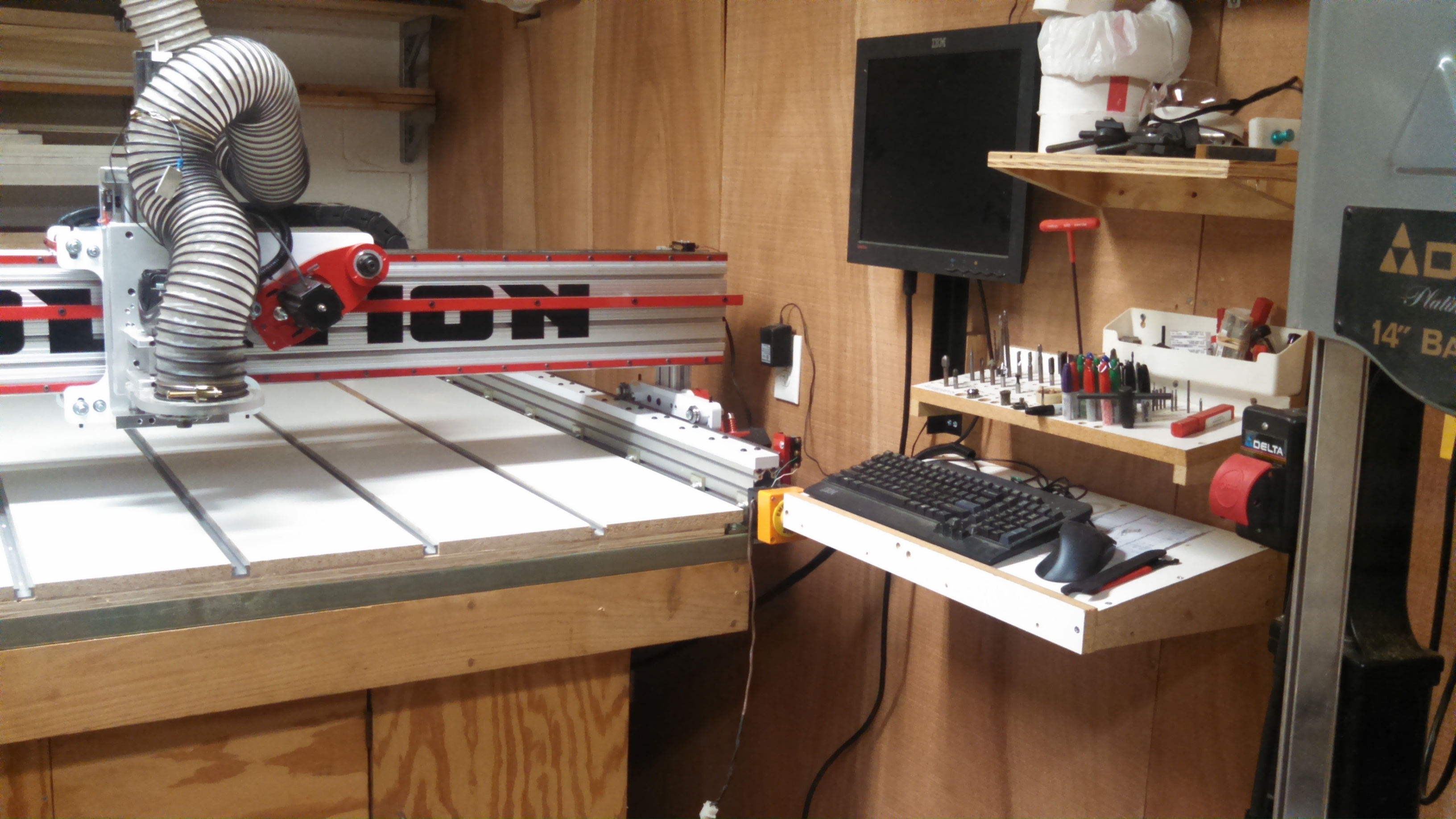
The CNC router John designed and built himself — running on an old IBM computer.
The machine that cuts the guitars out was designed and built by John himself: a CNC router. He's made four versions of it over the years (see Making & Workshop). It's run by an old IBM computer, and follows the G-code programming to replicate the digital CAD design into a physical part. Making a guitar took several practice attempts to get the design and cutting parameters right — several practice bodies and necks were cut before he moved on to the expensive materials.
Neck & fretboard
The neck is cut out on the CNC machine, followed by many hours of hand sanding. The fretboard is also CNC-cut, and also requires careful hand work. The truss rod is fitted and the fretboard is glued on — with a good deal of hand finishing needed before the neck is complete.
The neck bezel and Bishop logo are installed, and the fretboard is glued to the neck inside a special fixture to keep the neck straight.
Fret wire has to be bent to a radius matching the fretboard — John built his own fret-wire radius bending tool, made from parts from a 3D printer and some bearings. Each fret is then cut to size and installed, along with pearl fret dot inlays. After installation, the whole fretboard is leveled and each individual fret is re-crowned and shaped by hand.
Pickups
John makes his own pickups too. The black flatwork is cut out, magnets are inserted, and a top is put over the magnets to create a "bobbin," which is then dipped in lacquer. Once assembled, pickup wire is wound around the magnets to create the pickup. The assembly is wired with leads, potted in wax, and magnetized according to its position in the guitar — using an N-S-N polarity arrangement to create a humbucker effect with the middle pickup.
Finishing & assembly
Finish is, in John's words, perhaps the most challenging part of the whole process — mistakes mean hours of sanding and rework. Once the finish is on, the guitar gets a first test assembly to make sure everything fits together before final assembly.
Finished guitars
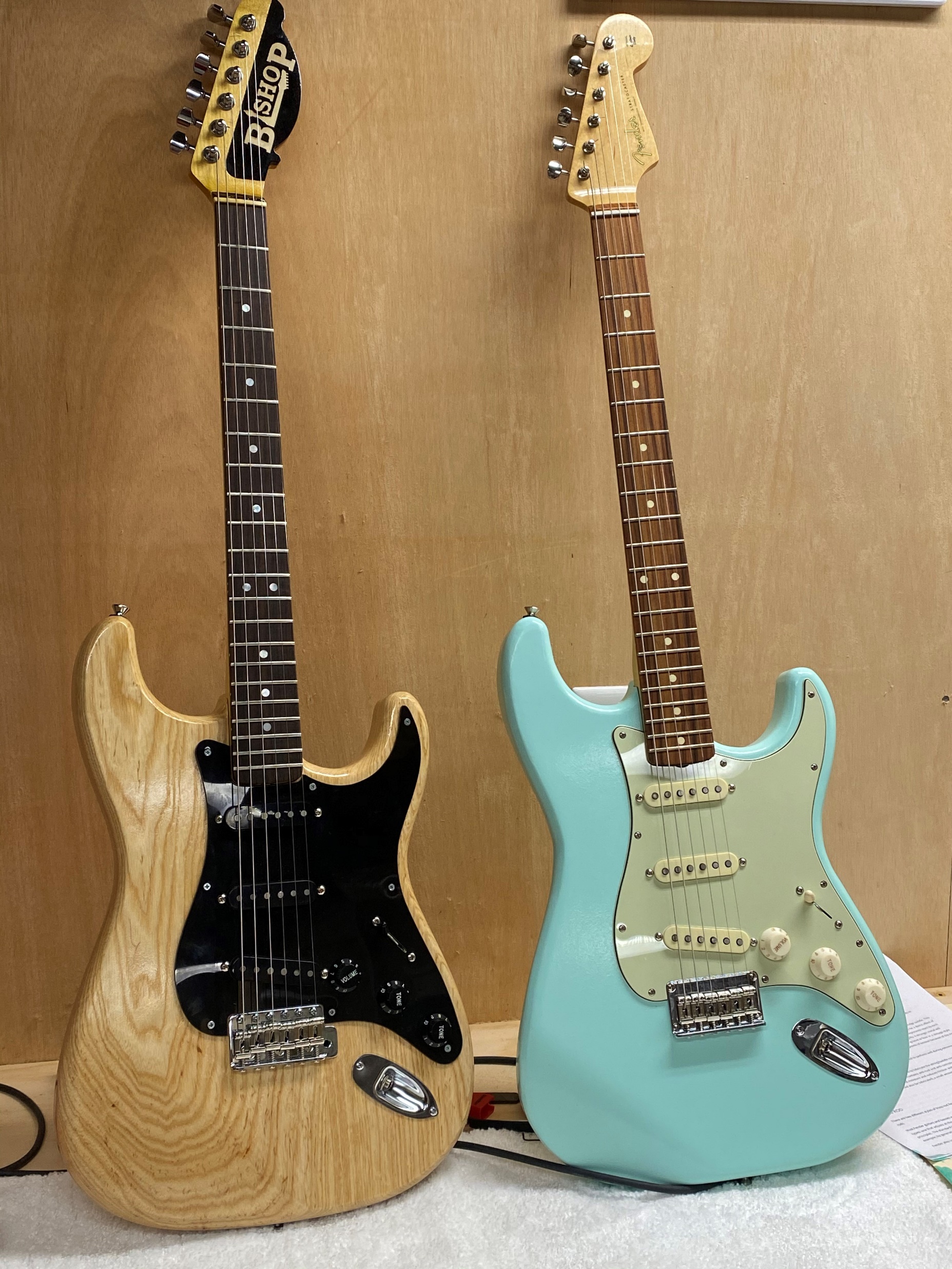
"Brother and sister" Strat-style guitars, built together and then separated. Left: ash body, full tremolo, 3 Bishop custom pickups, Bishop maple neck with rosewood fretboard (7.25" radius, dual-action truss rod). Right: hard-tail bridge (no tremolo), a custom request, built from torrefied alder with a Fender Custom Shop neck.
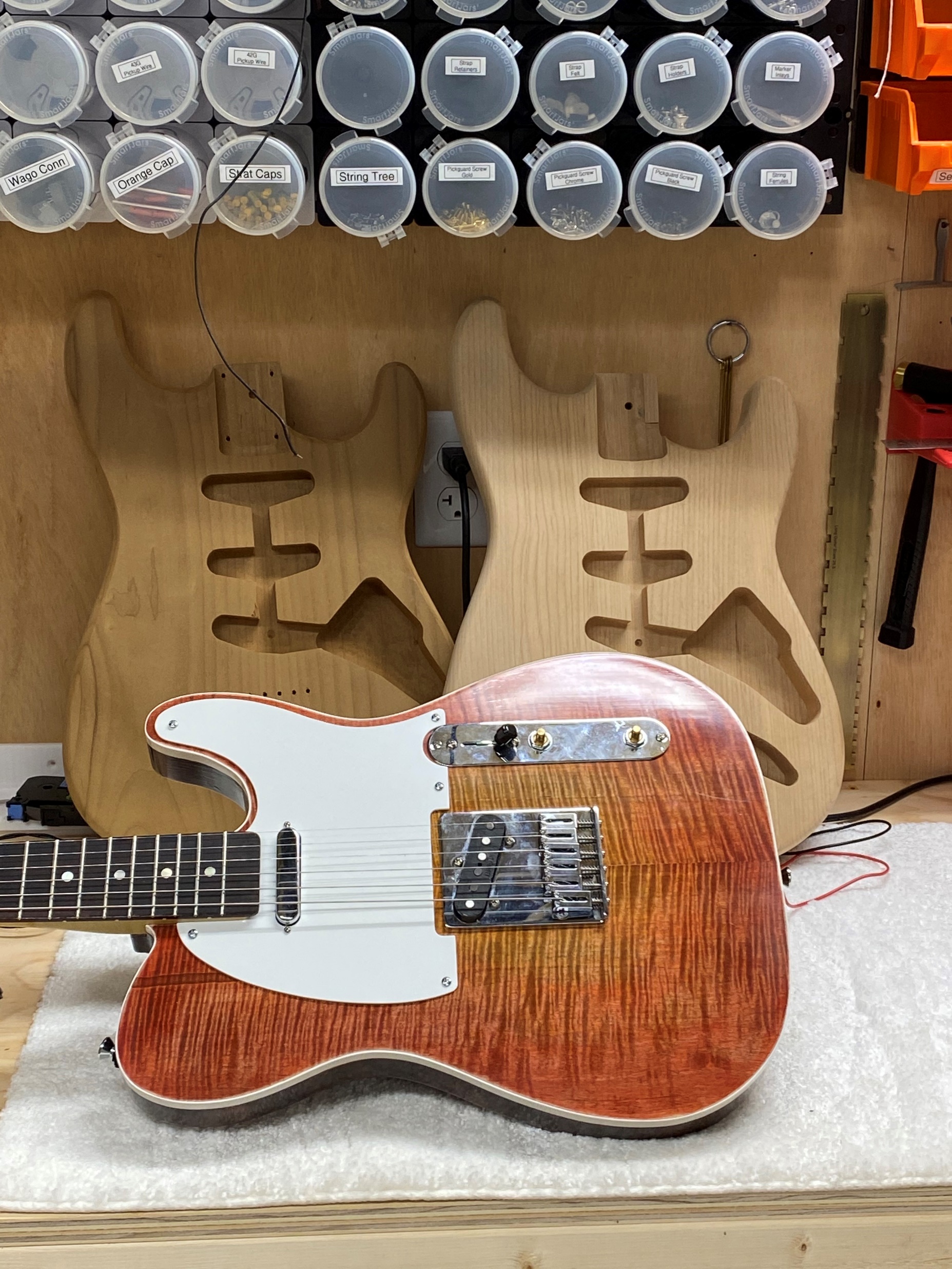
A custom semi-hollow flame-top Telecaster with white binding and a Fender Custom Shop roasted maple neck.
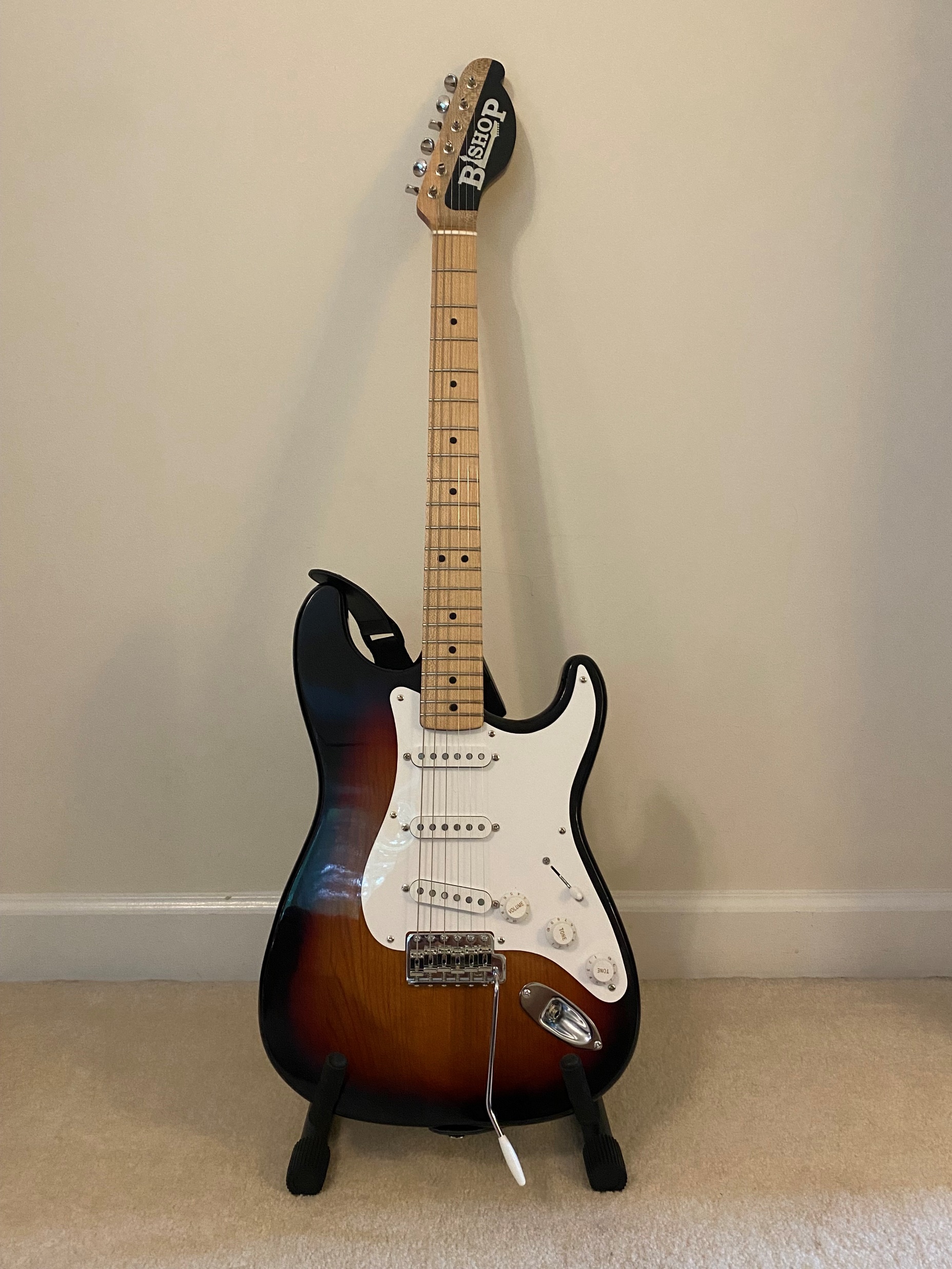
A standard '57 Telecaster build with a tobacco burst finish.
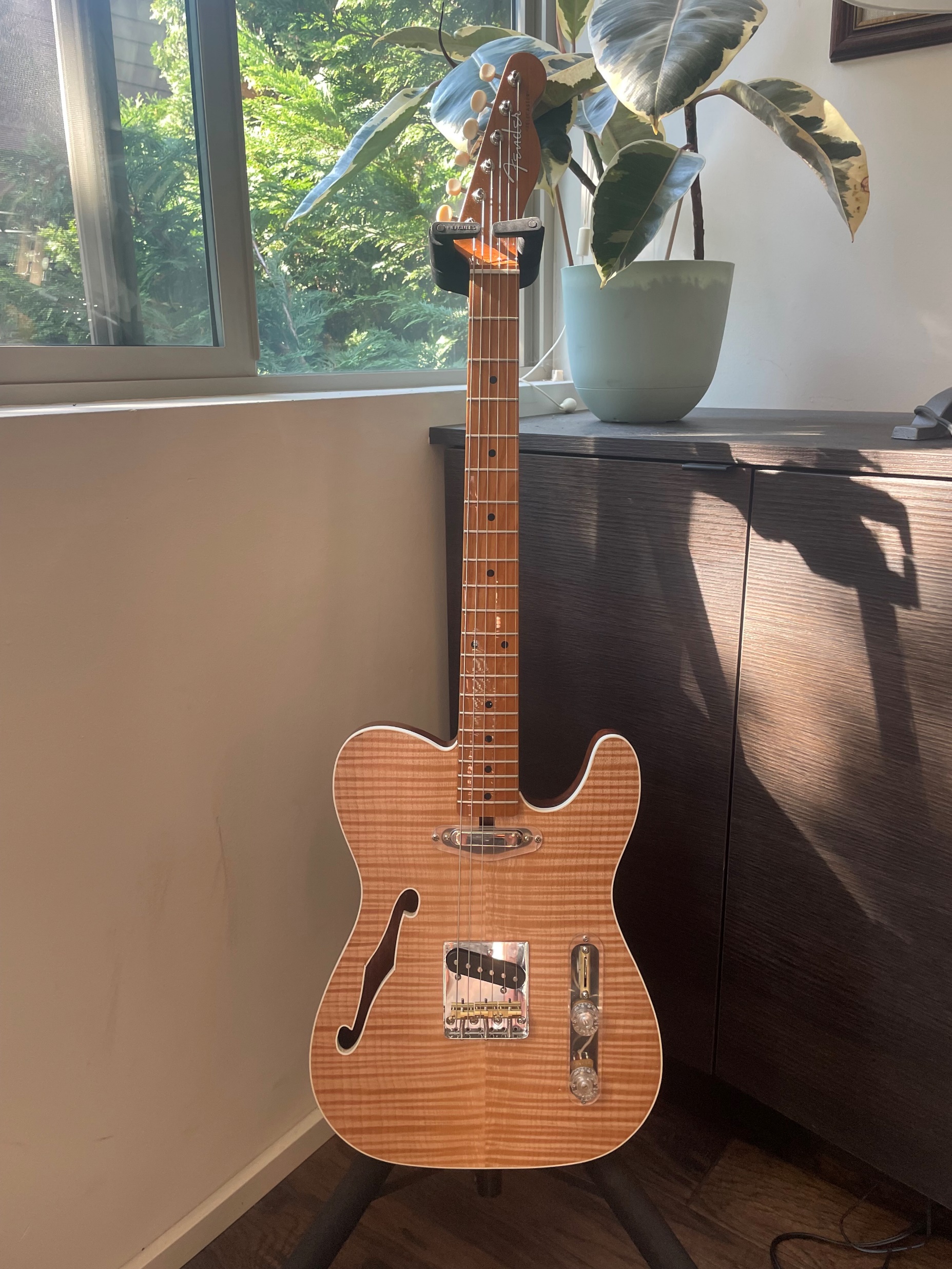
A solid-body flame maple top guitar with a mahogany base and sunburst finish, with two more Stratocasters in the background waiting to be finished.
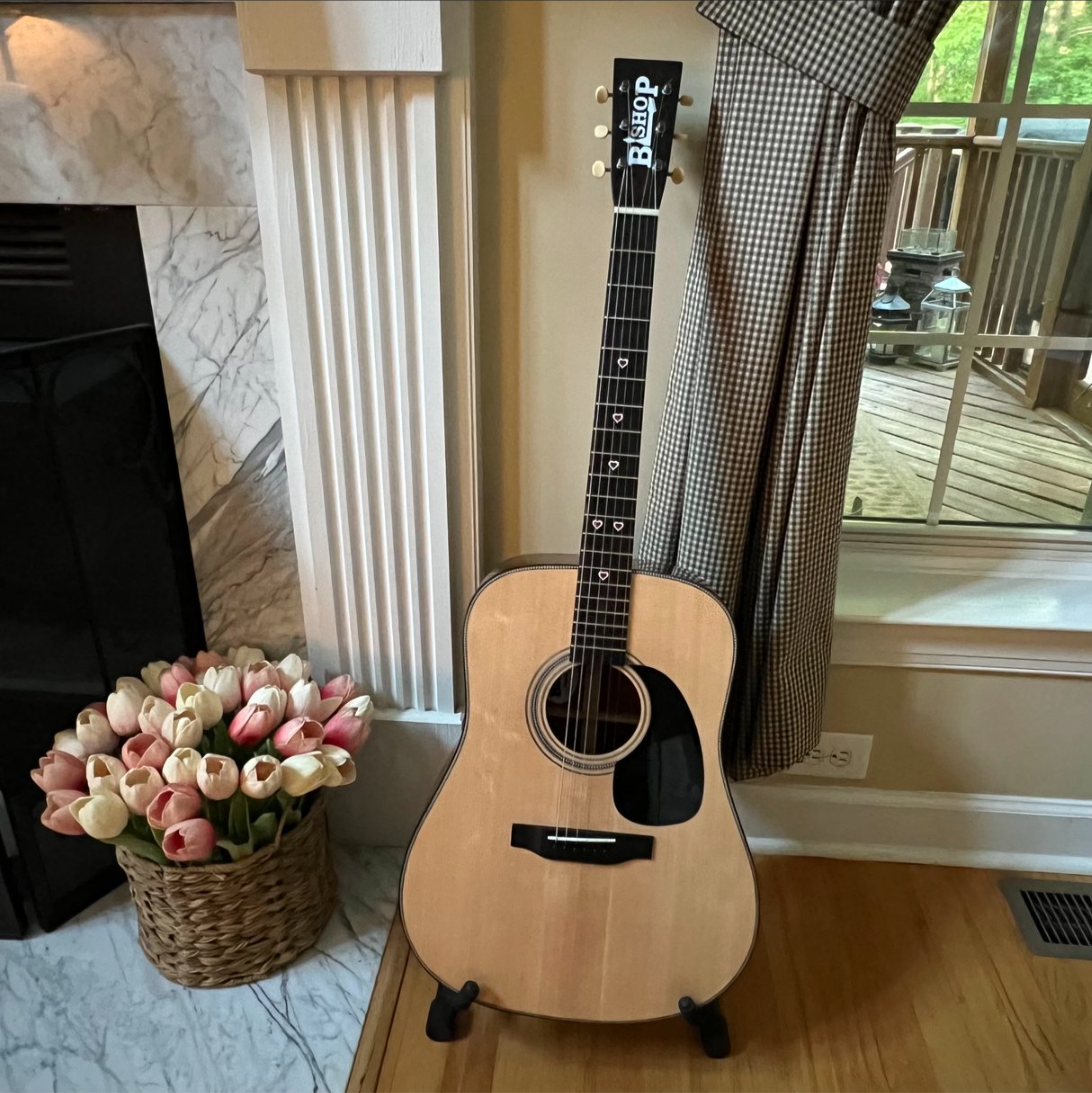
A Bishop acoustic dreadnought John built for Becky, with heart fretboard inlays. Source: Amazon Photos.
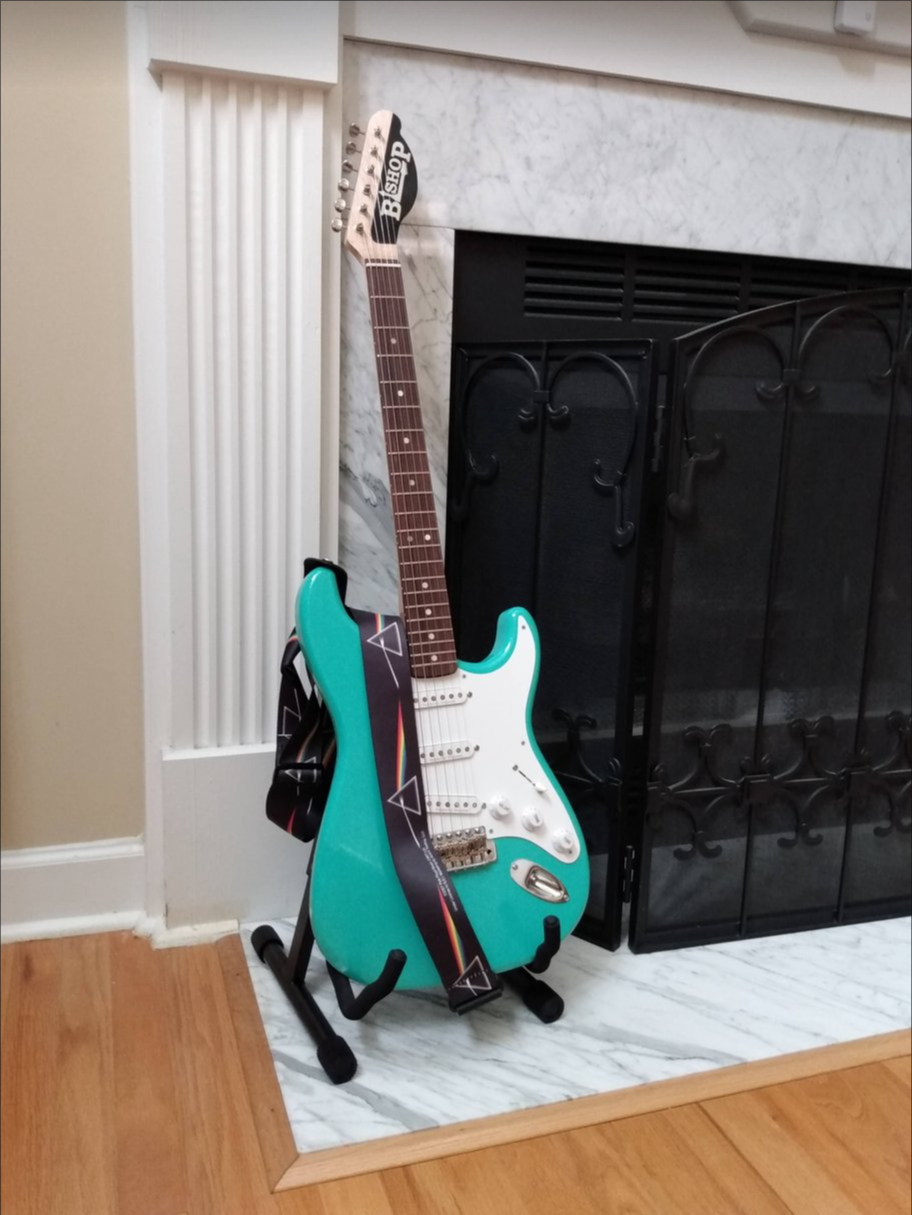
A seafoam-green Bishop Stratocaster-style guitar John built for Avery. Source: Amazon Photos.